S.S Tanks
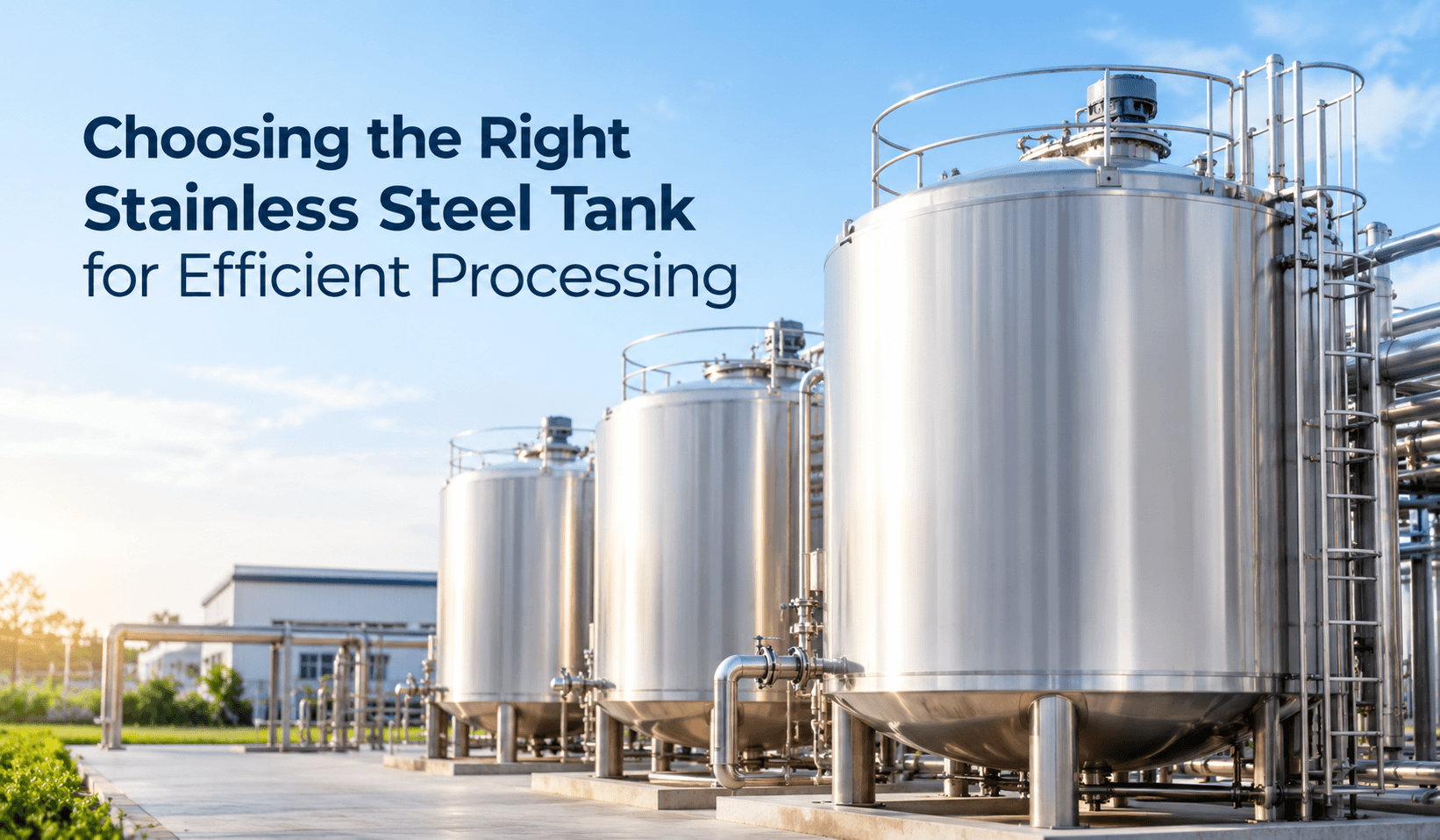
Choosing the Right Stainless Steel Tank for Efficient Processing
Introduction
Selecting a storage tank is an important engineering decision for industries that handle water, food products, chemicals, pharmaceuticals, and other liquids. The right choice depends on more than capacity. Material grade, hygiene requirements, corrosion resistance, fabrication quality, installation conditions, and maintenance expectations all affect long-term suitability. Businesses researching an ss tanks manufacturer in ahmedabad should therefore assess technical capabilities alongside product specifications. Ambica Tanks approaches tank requirements with attention to application-specific factors, helping buyers understand what should be evaluated before making a purchase.
Why Stainless Steel Is Chosen for Storage
Stainless steel is widely used where durability, cleanliness, and resistance to corrosion are important. Its properties make it suitable for environments where tanks may encounter moisture, cleaning processes, or substances that could affect less resistant materials.
The appropriate grade depends on the intended application. Different grades offer different levels of corrosion resistance and suitability for particular operating environments. Surface finish is another consideration, especially in applications where cleanliness and ease of cleaning are priorities.
Before selecting a tank, users should establish:
- The liquid or material to be stored
- Required storage capacity
- Operating temperature
- Cleaning and sanitation requirements
- Indoor or outdoor installation conditions
- Expected frequency of use and inspection
Understanding these requirements at the beginning helps narrow down suitable configurations and avoids relying on generic specifications.
Getting More From Steel Water Tanks
For commercial, industrial, institutional, and infrastructure applications, steel water tanks can provide a practical option when substantial storage capacity and structural strength are required. However, choosing a tank should involve more than determining how many litres it needs to hold.
Tank dimensions influence installation space, accessibility, transportation, and support requirements. Connections for inlet, outlet, overflow, drainage, and inspection should also be considered according to how the system will operate.
| Factor | What the buyer should evaluate |
|---|---|
| Capacity | Daily demand, peak requirements, and storage reserve |
| Material grade | Compatibility with the stored liquid and environment |
| Construction | Weld quality, structural design, and dimensional accuracy |
| Surface finish | Cleaning requirements and exposure conditions |
| Connections | Position and size of inlet, outlet, overflow, and drain points |
| Maintenance | Accessibility for inspection, cleaning, and repairs |
A tank that matches the complete system is generally easier to operate and maintain than one selected only on the basis of capacity..
Design Details That Affect Performance
Tank design should account for the conditions under which the equipment will actually operate. An outdoor installation, for example, may experience greater exposure to weather and temperature changes than an indoor system. Similarly, tanks used for process applications may have different requirements from those intended solely for water storage.
Structural design is also important. The tank must be appropriately supported and installed so that loading conditions are properly managed. Welded joints, fittings, nozzles, covers, and access points should be considered as part of the complete design rather than as isolated components.
Clear communication between the buyer, engineering team, and fabricator can help identify these requirements early. Providing accurate information about the intended application allows the final configuration to be developed around actual operating conditions.
What to Assess in an SS Water Tank Supplier
When comparing an ss water tank manufacturer, buyers should look beyond appearance and quoted capacity. Manufacturing processes, material traceability, fabrication practices, inspection procedures, and documentation can provide useful insight into the quality-control approach.
It is worth discussing the following before production:
- Material specifications and applicable grades
- Tank dimensions and wall construction
- Welding and fabrication procedures
- Required fittings and connections
- Surface treatment or finishing requirements
- Inspection and testing expectations
- Installation and delivery considerations
Documentation is particularly useful for industrial projects where equipment records may be required for maintenance, quality assurance, or future modifications.
Planning for Maintenance and Service Life
Even a well-designed tank requires appropriate care. Routine inspection can help identify surface damage, corrosion, leakage, deteriorating fittings, or other issues before they develop into larger problems. Cleaning schedules should be based on the stored material and operating environment.
Installation should also leave adequate access for inspection and maintenance. Difficult-to-reach areas can increase service complexity and make routine checks less convenient.
A lifecycle approach is therefore preferable to focusing only on the initial purchase. Considering cleaning, inspection, access, repairs, and eventual replacement during selection can support more predictable ownership over time.
Frequently Asked Questions
Find answers to common questions about industrial storage tanks and pressure vessels.
The stored material, corrosion exposure, temperature, cleaning process, and environmental conditions all influence grade selection.
Capacity should be based on actual consumption, peak demand, replenishment schedules, and the available installation area.
They can be, provided the material, construction, surface treatment, support system, and installation are appropriate for the environmental conditions.
Welded joints contribute to structural integrity and leak resistance, making fabrication quality an important consideration during selection.
Confirm dimensions, support requirements, connection positions, access for maintenance, site conditions, and transportation or lifting arrangements.
Conclusion
A suitable storage tank should reflect the liquid being stored, environmental conditions, capacity requirements, installation constraints, and long-term maintenance needs. When evaluating an ss tank manufacturer, buyers should consider engineering expertise, material quality, fabrication practices, documentation, and application-specific design rather than focusing on price alone. A careful selection process can help ensure that the chosen equipment fits the intended system and remains practical to operate, inspect, and maintain throughout its service life.