S.S Tanks
How Industrial Storage Tanks Support Efficient Manufacturing Operations
Introduction
Modern manufacturing facilities depend on a vast network of equipment working seamlessly behind the scenes. Among the most critical yet underappreciated components are industrial storage tanks, which play an indispensable role in managing raw materials, intermediate products, and finished goods throughout the production cycle. From food processing units to chemical plants, these structures ensure that operational continuity is never compromised. The demand for reliable containment solutions has grown substantially, making pressure vessels manufacturers in India a cornerstone of the country's industrial supply chain. Their expertise directly shapes how efficiently facilities can operate at scale.
The Role of Storage Tanks in Manufacturing Workflows
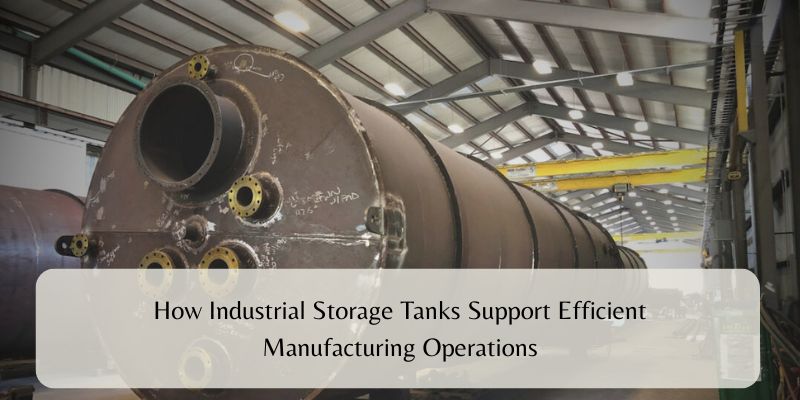
Industrial storage tanks are far more than passive containers. They actively regulate the flow of liquids, gases, and slurries across every stage of manufacturing. Without properly designed tanks, production lines face interruptions caused by supply inconsistencies or contamination risks.
Key functions they serve include:
- Holding bulk raw materials before they enter the production line
- Maintaining process fluids at specific temperatures and pressures
- Enabling batch processing by creating buffer zones between stages
- Storing finished goods safely until they are dispatched
- Supporting utility systems such as water treatment and fuel storage
Their design must account for material compatibility, temperature variance, and load-bearing capacity, all of which vary significantly across industries.
Types of Tanks and Their Industrial Applications
Different manufacturing environments call for different tank configurations. Pressure vessel manufacturers India supply a broad spectrum of tank types tailored to sector-specific demands. Choosing the right type is essential to both safety and productivity.
| Tank Type | Primary Use | Key Feature |
|---|---|---|
| Vertical Storage Tanks | Chemical and water storage | Space-efficient footprint |
| Horizontal Tanks | Fuel and oil storage | Easy ground-level access |
| Pressure Vessels | High-pressure gas/liquid containment | Withstands elevated internal pressure |
| Lined Tanks | Corrosive fluid storage | Internal protective coating |
| Jacketed Tanks | Temperature-sensitive processes | Heating or cooling jacket layer |
Each category demands precise engineering to meet both regulatory standards and operational requirements. Manufacturers must carefully select materials such as stainless steel, carbon steel, or high-density polyethylene based on the nature of the stored substance.
How Tank Design Impacts Production Efficiency
Efficiency in manufacturing is often measured in uptime, throughput, and waste reduction. Tank design directly influences all three. Poorly designed storage systems create bottlenecks, contamination risks, and energy waste. Pressure vessel manufacturers who understand process engineering contribute significantly to operational optimization.
Factors that link tank design to production efficiency:
- Optimized outlet and inlet configurations reduce transfer time
- Sloped bottoms in tanks allow complete drainage, minimizing product waste
- Insulated tanks reduce energy consumption for temperature-controlled storage
- Modular designs allow capacity scaling without full infrastructure overhaul
- Corrosion-resistant materials extend service life and reduce replacement cycles
When tanks are designed in alignment with the broader process flow, they become active contributors to lean manufacturing rather than passive storage units.
Frequently Asked Questions
Find answers to common questions about industrial storage tanks and pressure vessels.
A storage tank typically operates at or near atmospheric pressure and is used to hold liquids or gases without significant internal pressure. A pressure vessel, in contrast, is designed to contain substances at pressures substantially different from the ambient environment, requiring stricter design and testing standards.
Material selection depends on the chemical nature of the stored substance, operating temperature, pressure requirements, and regulatory standards for your industry. Common choices include stainless steel for hygienic or corrosive environments, carbon steel for general-purpose use, and lined tanks for highly reactive chemicals.
Inspection frequency depends on the type of tank, the substances stored, and applicable regulations. Generally, visual inspections occur annually, while comprehensive non-destructive testing is conducted every three to five years. Pressure vessels may require more frequent statutory inspections based on operating conditions.
Conclusion
Industrial storage tanks are foundational to manufacturing efficiency, safety, and scalability. From the initial design phase to long-term maintenance, every aspect of tank engineering affects how well a production facility performs. Selecting the right fabrication partner is therefore a strategic decision, not merely a procurement one. Working with a qualified pressure vessel fabrication company in India ensures access to certified engineering expertise, robust quality controls, and customized solutions that align with real-world operational demands. Ambicatanks exemplifies this standard, offering a comprehensive range of industrial storage and pressure vessel solutions built to support the evolving needs of modern manufacturing operations across diverse sectors.